Generative Engine Optimization (GEO)

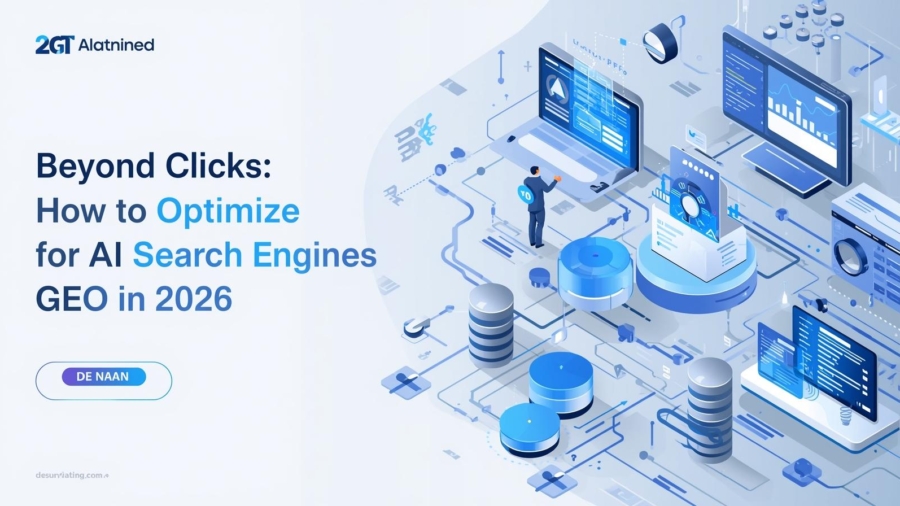
Beyond Clicks: How to Optimize for AI Search Engines (Generative Engine Optimization – GEO) in 2026

Introduction

Search engine optimization has evolved dramatically over the last two decades. From simple keyword stuffing in the early 2000s to advanced algorithm-based ranking systems, SEO has constantly adapted to technological innovations. However, 2026 marks the beginning of a completely new era in search — the age of AI-powered search engines.

Instead of simply providing a list of links, modern search engines now deliver direct AI-generated answers, summaries, and recommendations. This shift has changed how people search for information and how businesses must optimize their online presence.

Traditional SEO focused on ranking higher on search engine result pages (SERPs). But in the era of AI search, visibility is no longer limited to ranking on page one. Instead, the goal is to become a trusted source used by AI systems to generate answers.

This new discipline is called Generative Engine Optimization (GEO).

Generative Engine Optimization (GEO) focuses on optimizing content so that AI-powered search engines and generative AI tools use your content as a source when generating responses.

In this article, we will explore:

  • What Generative Engine Optimization (GEO) is
  • Why GEO is replacing traditional SEO strategies
  • How AI search engines work
  • Proven GEO strategies for 2026
  • The future of AI-driven search optimization

If you want to stay ahead in digital marketing, understanding Generative Engine Optimization (GEO) is no longer optional — it is essential.

What is Generative Engine Optimization (GEO)?

Generative Engine Optimization (GEO) refers to the process of optimizing content so that AI search engines and generative AI models use your information as part of their generated answers.

Unlike traditional SEO, which aims to rank web pages in search results, GEO focuses on making your content the trusted source for AI-generated responses.

In simple terms:

Traditional SEO = Rank on Google search results
Generative Engine Optimization (GEO) = Become the source AI uses to answer questions

AI search tools now summarize multiple sources to provide a single answer. If your content is structured properly, AI engines will reference, summarize, or cite your information.

Examples of AI search tools include:

  • AI chat search engines
  • AI assistants
  • AI-powered browser search
  • Generative AI tools used for research

This means visibility now comes from being included in AI-generated responses, not just from organic clicks.

Zero-Click Searches Are Increasing

A large percentage of searches now end without a click, because users get the answer directly from AI.

This means businesses must adapt their strategy to ensure their content appears inside AI-generated responses.

That is where Generative Engine Optimization (GEO) becomes essential.

AI Search Prioritizes Authority and Trust

AI search engines rely heavily on credible and authoritative sources.

Content that demonstrates:

  • expertise
  • accuracy
  • structured information
  • clear explanations

has a higher chance of being used by AI models.

How AI Search Engines Work

To understand Generative Engine Optimization (GEO), you must first understand how AI search engines operate.

AI-powered search engines follow three main steps:

Data Collection

AI systems gather data from websites, databases, research papers, blogs, and structured content.

Content Understanding

AI models analyze:

  • context
  • meaning
  • semantic relationships
  • topic relevance

They do not just scan keywords — they understand concepts and intent.

Answer Generation

The AI then generates a response by combining information from multiple sources.

If your content is well-structured and authoritative, it has a higher chance of being included in AI-generated answers.

Key Differences Between SEO and GEO

Traditional SEOGenerative Engine Optimization (GEO)
Focus on rankingFocus on being referenced by AI
Keyword optimizationContext and semantic optimization
Link buildingAuthority and credibility
Click-through rateAI answer inclusion
Page rankingsAI response visibility

Both SEO and GEO are important, but GEO is becoming the next evolution of search optimization.

Core Strategies for Generative Engine Optimization (GEO)

To succeed with Generative Engine Optimization (GEO) in 2026, businesses must adopt new optimization strategies.

Here are the most effective GEO techniques.

Create High-Quality, Authoritative Content

AI search engines prioritize reliable and expert-level information.

Your content should:

  • answer real user questions
  • include clear explanations
  • provide actionable insights
  • include examples and case studies

Optimize Content for Conversational Queries

AI search engines process natural language questions rather than simple keywords.

Instead of writing only for keywords, create content that answers questions like:

  • What is Generative Engine Optimization (GEO)?
  • How does GEO work?
  • Why is GEO important in 2026?

This improves your chances of appearing in AI-generated responses.

Use Structured Content

AI systems prefer well-organized content.

Use clear structure such as:

  • headings
  • bullet points
  • numbered lists
  • FAQs

Example:

Bad structure
Long paragraphs with no headings.

Good structure
Clear sections with descriptive headings.

This helps AI understand and extract relevant information.

Build Topical Authority

Instead of publishing random articles, focus on topic clusters.

Example cluster:

Main topic:
Generative Engine Optimization (GEO)

Supporting articles:

  • GEO vs SEO
  • AI search optimization strategies
  • Future of AI search
  • AI content ranking factors

This tells AI that your website is an authority in that subject area.

Use Semantic SEO

AI search engines rely on semantic relationships between topics.

Include related concepts like:

  • AI search engines
  • conversational search
  • natural language processing
  • AI content indexing

This improves your content relevance.

Optimize for Featured Snippets and AI Summaries

AI engines often pull information from concise summaries.

Best practices include:

  • writing short definition paragraphs
  • including quick answers
  • adding step-by-step instructions

Example:

“What is Generative Engine Optimization (GEO)?”

Follow with a clear 2–3 sentence definition.

Improve E-E-A-T (Experience, Expertise, Authority, Trust)

Search engines and AI systems evaluate content based on E-E-A-T signals.

You can improve E-E-A-T by:

  • adding author profiles
  • including credible sources
  • showing real expertise
  • publishing original research

Trustworthy websites are more likely to be used by AI search tools.

Optimize Technical SEO

Even in the age of AI, technical SEO remains important.

Ensure your website has:

  • fast loading speed
  • mobile-friendly design
  • structured data markup
  • clean site architecture

This allows AI crawlers to easily access your content.

Add FAQ Sections

FAQ sections are extremely helpful for Generative Engine Optimization (GEO).

AI tools frequently extract answers from FAQ sections.

Example questions:

  • What is GEO in SEO?
  • How do AI search engines rank content?
  • How can businesses optimize for AI search?

Focus on Helpful Content

AI search engines reward user-focused content.

Avoid writing content purely for ranking.

Instead focus on:

  • solving real problems
  • providing practical solutions
  • delivering value to readers

GEO Content Format That Works Best

The following format performs well for Generative Engine Optimization (GEO):

  1. Clear headline
  2. Quick definition
  3. Detailed explanation
  4. Step-by-step strategies
  5. Real examples
  6. FAQs
  7. Summary

This structure helps AI extract key insights easily.

Benefits of Generative Engine Optimization (GEO)

Businesses that adopt GEO early will gain several advantages.

Higher Visibility in AI Search

Your content can appear directly in AI-generated responses.

Increased Brand Authority

Being referenced by AI tools builds credibility.

More Organic Traffic

Even though clicks may decrease, brand exposure increases significantly.

Competitive Advantage

Most businesses still rely on traditional SEO strategies.

Implementing Generative Engine Optimization (GEO) early provides a strong competitive edge.

Common GEO Mistakes to Avoid

Many businesses misunderstand GEO and make mistakes such as:

Ignoring structured content
Writing shallow articles
Overusing keywords
Not answering user intent
Publishing AI-generated content without value

Quality, clarity, and expertise are the keys to GEO success.

The Future of Search: AI + Human Content

The future of search will not eliminate websites.

Instead, it will prioritize high-quality content that AI systems trust.

Websites will continue to play a crucial role because AI systems need reliable sources of information.

Businesses that focus on Generative Engine Optimization (GEO) will be more visible across:

  • AI search engines
  • voice assistants
  • conversational search platforms
  • AI research tools

Final Thoughts

Search is evolving faster than ever. The shift from traditional search results to AI-generated answers is reshaping digital marketing strategies.

Businesses that rely only on traditional SEO risk losing visibility as AI search engines continue to grow.

Generative Engine Optimization (GEO) provides a powerful way to ensure your content remains visible in the AI-driven search landscape.

By focusing on:

  • authoritative content
  • semantic optimization
  • structured information
  • user-focused answers

you can position your website as a trusted source for AI search engines.

The future of digital marketing is no longer just about rankings or clicks — it is about becoming the information source that AI relies on.

That is the true power of Generative Engine Optimization (GEO) in 20
Conversion rate optimization techniques

Conversion Rate Optimization (CRO) Techniques Used by Agencies

In today’s competitive digital world, getting traffic to your website is only half the battle. The real challenge lies in converting that traffic into leads, customers, or subscribers. This is where conversion rate optimization techniques play a crucial role.

Digital marketing agencies focus heavily on Conversion Rate Optimization (CRO) because it helps businesses generate more revenue without increasing marketing budgets. Instead of spending more money on ads or traffic acquisition, CRO focuses on improving website performance to convert existing visitors into customers.

Many businesses struggle with low conversions even when they have good traffic. Visitors land on the website but leave without taking action. Agencies solve this problem by analyzing user behavior, optimizing landing pages, improving messaging, and testing multiple variations of web pages.

In this detailed guide, we will explore the most powerful conversion rate optimization techniques used by agencies to improve website performance, increase leads, and maximize ROI.

What is Conversion Rate Optimization (CRO)?

Conversion Rate Optimization (CRO) is the process of improving a website or landing page to increase the percentage of visitors who complete a desired action.

A conversion could be:

  • Filling out a form
  • Purchasing a product
  • Signing up for a newsletter
  • Downloading an ebook
  • Booking a consultation

For example:

If 1000 visitors come to your website and 50 people purchase a product, your conversion rate is:

Conversion Rate = (Conversions ÷ Visitors) × 100

50 ÷ 1000 × 100 = 5% Conversion Rate

The goal of CRO is to increase that percentage by optimizing various elements of the website.

Instead of increasing traffic, businesses can generate more revenue from existing visitors through CRO.

Why Conversion Rate Optimization is Important for Businesses

Digital marketing agencies strongly recommend CRO because it provides multiple benefits.

Higher ROI from Marketing Campaigns

If your conversion rate increases, every visitor becomes more valuable. This means your marketing campaigns generate more revenue without increasing ad spend.

Better User Experience

CRO improves website navigation, design, and usability. When users find it easy to interact with your website, they are more likely to convert.

Reduced Customer Acquisition Cost

Businesses spend a lot of money acquiring customers through ads. CRO reduces acquisition costs by converting more visitors.

Increased Sales and Leads

Even a small improvement in conversion rate can significantly impact revenue.

For example:

  • 2% conversion rate → 20 sales per 1000 visitors
  • 4% conversion rate → 40 sales per 1000 visitors

That is double the sales with the same traffic.

Key Conversion Rate Optimization Techniques Used by Agencies

Now let’s explore the most effective conversion rate optimization techniques used by professional digital marketing agencies.

A/B Testing (Split Testing)

A/B testing is one of the most powerful CRO strategies.

In this technique, agencies create two versions of a webpage and test which one performs better.

Example:

Version A → Original page
Version B → Modified page

Both versions are shown to users, and the one with higher conversions wins.

Agencies commonly test:

  • Headlines
  • Call-to-action buttons
  • Images
  • Landing page layouts
  • Form fields
  • Colors and design elements

A/B testing allows businesses to make data-driven decisions instead of guessing, helping identify what works best for users.

Landing Page Optimization

Landing pages are the most important elements for conversions.

A landing page should:

  • Clearly explain the offer
  • Highlight benefits
  • Provide strong call-to-action
  • Remove distractions

Agencies optimize landing pages by:

  • Adding compelling headlines
  • Improving visuals and images
  • Simplifying content
  • Adding testimonials
  • Improving CTA placement

Optimized product pages with better images, descriptions, and reviews can significantly increase conversions.

User Behavior Analysis

Before making changes, agencies analyze how visitors interact with websites.

They use tools like:

  • Heatmaps
  • Session recordings
  • Scroll maps
  • Click tracking

These tools reveal:

  • Where users click
  • Which sections they ignore
  • Where they drop off

Understanding user behavior helps agencies identify problems in the conversion funnel.

For example:

If users abandon the checkout page frequently, the issue could be:

  • Complicated forms
  • Slow loading pages
  • Lack of trust signals

By identifying these issues, agencies can optimize the website effectively.

Improving Website Speed

Page speed has a huge impact on conversion rates.

If a website loads slowly, visitors leave before even viewing the content.

Studies show that even a one-second delay in page load time can reduce conversions.

Agencies optimize speed by:

  • Compressing images
  • Using fast hosting
  • Reducing unnecessary scripts
  • Enabling caching
  • Using content delivery networks (CDN)

Faster websites improve user experience and significantly boost conversion rates.

Strong Call-to-Action (CTA) Optimization

The Call-to-Action (CTA) is the most important conversion element.

Examples of CTAs include:

  • Buy Now
  • Get Started
  • Book a Demo
  • Download Now
  • Get Free Quote

Agencies optimize CTAs by:

  • Using action-oriented language
  • Placing CTAs above the fold
  • Using contrasting colors
  • Making buttons larger and visible

A simple change in CTA text or design can dramatically increase conversions.

Social Proof and Trust Signals

People trust recommendations from other customers.

That is why agencies add social proof elements such as:

  • Customer reviews
  • Testimonials
  • Case studies
  • Star ratings
  • Client logos

These elements build credibility and reduce purchase anxiety.

Social proof works because visitors feel more confident buying when they see others having positive experiences.

Personalization and Dynamic Content

Personalization is one of the most advanced conversion rate optimization techniques used by agencies.

Instead of showing the same content to every visitor, agencies personalize experiences based on:

  • User behavior
  • Location
  • Device
  • Past purchases
  • Browsing history

Examples:

  • Showing recommended products
  • Personalized offers
  • Customized landing pages

AI-driven personalization can significantly increase conversions by tailoring experiences to individual users.

Exit Intent Popups

Exit intent popups appear when a visitor is about to leave the website.

These popups can offer:

  • Discounts
  • Free resources
  • Newsletter subscriptions
  • Special offers

Exit popups help capture leads that would otherwise be lost.

When implemented correctly, they can recover a significant percentage of abandoning visitors.

Reducing Form Fields

Long forms reduce conversions.

Agencies simplify forms by:

  • Reducing unnecessary fields
  • Using multi-step forms
  • Using autofill features

For example:

Instead of asking for:

Name
Email
Phone
Company
Job Title
Industry

A simple form may ask only:

Name
Email

Shorter forms increase completion rates and generate more leads.

Mobile Optimization

More than half of website traffic comes from mobile devices.

If a website is not mobile-friendly, conversion rates drop significantly.

Agencies ensure that websites are:

  • Mobile responsive
  • Easy to navigate
  • Fast loading on mobile devices
  • Optimized for touch interactions

Mobile-optimized websites generate more leads and sales.

Creating Urgency and Scarcity

Urgency is a powerful psychological trigger used in CRO.

Examples include:

  • Limited-time offers
  • Countdown timers
  • Limited stock alerts
  • Flash sales

These tactics encourage visitors to take immediate action.

However, agencies ensure that urgency is genuine to maintain customer trust.

Chatbots and Live Chat

Many visitors leave websites because they cannot find answers quickly.

Live chat and chatbots help solve this problem by providing instant assistance.

Benefits include:

  • Real-time support
  • Lead qualification
  • Automated responses
  • Appointment scheduling

Conversational marketing helps businesses engage visitors instantly and guide them toward conversions.

Removing Website Distractions

Too many elements on a webpage can distract visitors.

Agencies simplify websites by removing:

  • Unnecessary links
  • Too many banners
  • Excessive popups
  • Complex navigation

A clean and focused design helps visitors concentrate on the main action.

Multivariate Testing

Multivariate testing is similar to A/B testing but more advanced.

Instead of testing two versions of a page, it tests multiple combinations of page elements simultaneously.

Example:

Testing combinations of:

  • Headline
  • Image
  • CTA button

Multivariate testing helps identify the best combination for maximum conversions.

Improving Website Copywriting

Persuasive copywriting is essential for conversions.

Agencies optimize website content by:

  • Highlighting benefits instead of features
  • Using persuasive language
  • Adding emotional triggers
  • Using power words like “Free”, “Instant”, “Proven”, “New”

Strong messaging encourages visitors to take action.

CRO Tools Used by Digital Marketing Agencies

Agencies rely on powerful tools for CRO analysis and optimization.

Popular CRO tools include:

  • Google Analytics
  • Hotjar
  • Crazy Egg
  • Optimizely
  • VWO
  • HubSpot

These tools help agencies analyze user behavior, test variations, and improve conversion rates.

CRO Best Practices Used by Agencies

To achieve the best results, agencies follow several best practices:

Focus on User Experience

User experience directly affects conversions.

Use Data-Driven Decisions

Agencies rely on analytics and testing rather than assumptions.

Test Continuously

CRO is an ongoing process.

Understand Customer Intent

Content and design should match visitor expectations.

Common CRO Mistakes Businesses Should Avoid

Many businesses fail at CRO because of common mistakes.

Ignoring Mobile Optimization

Mobile traffic is huge, and poor mobile experience kills conversions.

Too Many Popups

Too many popups frustrate visitors.

Weak Call-to-Action

A vague CTA reduces conversions.

Not Testing Changes

Without testing, improvements cannot be measured.

Future of Conversion Rate Optimization

CRO is evolving rapidly with new technologies.

Future trends include:

  • AI-driven personalization
  • Predictive analytics
  • Voice search optimization
  • Advanced automation

Businesses that adopt these technologies will gain a competitive advantage.

Conclusion

Conversion Rate Optimization is one of the most powerful strategies used by digital marketing agencies to increase business revenue.

Instead of focusing only on increasing website traffic, CRO focuses on converting existing visitors into customers.

By implementing conversion rate optimization techniques such as A/B testing, landing page optimization, user behavior analysis, personalization, and strong call-to-action strategies, businesses can significantly improve their conversion rates.

Even small improvements can lead to massive increases in sales and leads.

For businesses that want to maximize the value of their website traffic, investing in CRO is no longer optional—it is essential.

Digital Marketing Agencies

How Digital Marketing Agencies Get High-Paying Clients

In the fiercely competitive world of today, digital marketing firms are ubiquitous. The competition is fierce, ranging from small independent contractors running advertisements for nearby companies to full-service companies overseeing international brands. However, certain agencies routinely attract high-paying clients that are happy to invest $5,000, $10,000, or even $50,000+ each month, while many agencies struggle with low-paying clients, frequent turnover, and unpredictable cash flow.

So what separates struggling agencies from high-performing ones?

Strong growth plans for digital agencies, precise positioning, high-end branding, authority development, and methodical lead creation are the solutions.

This comprehensive guide will teach you, step-by-step, how digital marketing firms get in and hold on to high-paying customers.

Understanding High-Paying Clients

Let’s first clarify what a high-paying client actually entails before moving on to techniques.

Spending more money is not the only indicator of a high-paying client. They

  • Have a substantial marketing budget.
  • Prioritise knowledge over low prices.
  • Prioritise ROI over cost.
  • Make a long-term commitment
  • Be mindful of your process.

These clients are typically:

  • Startups that have received funding
  • Well-established SMEs
  • E-commerce companies that are rapidly growing
  • B2B businesses
  • Revenue-generating personal brands
  • SaaS businesses

Smart digital agency growth methods are used by agencies to draw in companies that view marketing as an investment rather than a cost.

Niche Down to Stand Out

Attempting to serve everyone is one of the biggest mistakes agencies make.

If your organization states:

“For all industries, we provide SEO, social media, Google Ads, Meta Ads, website design, and email marketing services.”

You sound just like everyone else.

Specialists are preferred by high-paying clients.

Why Niching Works

When you focus on a specific industry, you:

  • Gain a thorough understanding of their problems.
  • Understand their client’s journey
  • Create pertinent case studies
  • Create dependable frameworks
  • Charge premium fees.V

For example:

  • A company that specialises in generating leads for real estate
  • A company that exclusively works with D2C e-commerce brands
  • A B2B SaaS expansion firm
  • An expert in healthcare marketing

Because it turns you from a broad vendor into an industry expert, specialisation is one of the most effective growth tactics for digital agencies.

Build a Premium Brand Positioning

Premium brands attract high-paying customers.

You will draw in low-budget companies if your social media presence is poor, your messaging is ambiguous, and your website appears out of date.

Among the benefits of premium positioning are:

✔ Strong Website

  • Unambiguous value proposition
  • Results-oriented communication
  • Examples of cases
  • Testimonies
  • Simple design

✔ Professional Branding

  • A unified colour palette
  • powerful logo
  • Expert copywriting
  • Excellent images

✔ Authority Content

Trust is increased via publishing podcasts, YouTube videos, LinkedIn postings, and blogs.

As part of their digital agency growth plans, agencies that prioritise authority-building present themselves as thought leaders rather than service suppliers.

Develop Irresistible Case Studies

Nothing attracts high-paying clients more than proof.

Instead of saying:

“We improve ROI.”

Show:

  • “In 60 days, we produced 5,000 qualified leads.”
  • “We raised ROAS from two times to six times.”
  • “We increased monthly revenue from $50,000 to $200,000.”

A strong case study includes:

  • Background of the client
  • The issue
  • Strategy put into action
  • Results obtained
  • Timetable
  • Testimonies

A key component of effective digital agency growth strategy is results-driven storytelling.

Shift From Services to Solutions

Clients with low incomes purchase services.
Profitable customers purchase results.

Rather than selling:

  • bundles for SEO
  • Posting on social media
  • Management of advertisements

Sell:

  • System of revenue growth
  • Machine for generating leads
  • Scaling framework for e-commerce
  • Acceleration of B2B pipelines

Recast your offer in terms of how it would affect business.

For instance: Not

“Your Facebook ads are managed by us.”

However:

“We create and refine high-converting paid acquisition systems that produce steady income.”

This kind of positioning draws in decision-makers who appreciate change, which is essential to sophisticated digital agency expansion plans.

Implement Value-Based Pricing

Growth is constrained by hourly price.

Clients who pay well don’t care how many hours you put in. Results are important to them.

Instead, price based on

  • Potential return on investment
  • Impact on revenue
  • Intricacy
  • Strategic importance

For example:

You can charge $5,000 to $10,000 a month if your technique can help a client make an additional $500,000 a year.

Retainers and performance-based models replace hourly billing in agencies employing astute digital agency growth tactics.

Use LinkedIn for Authority & Outreach

LinkedIn is incredibly useful for B2B agencies.

CEOs, CMOs, and founders are among the high-paying clients who are active on LinkedIn.

LinkedIn Growth Plan:

  • Enhance your personal profile.
  • Exchange industry knowledge
  • After case studies
  • Make contact with decision-makers
  • Send tailored outreach

Engage in conversation rather than cold pitching.

For instance:

Hello John, I saw that you recently raised money for your SaaS. Similar SaaS companies have benefited from our 40% increase in paid acquisition ROI. I would adore connecting.

One of the most effective digital agency growth techniques for high-end clients is consistent LinkedIn positioning.

Run High-Ticket Funnel Campaigns

Create an organised funnel in place of haphazard lead generation:

Lead Magnet

  • No-cost audit
  • Report on the industry
  • Checklist for growth

Email Nurture

  • Value-based emails
  • Examples of cases
  • Stories of success

Strategy Call

Prior to scheduling calls, qualify potential customers.

By using funnel-based digital agency growth tactics, agencies can avoid squandering time on leads that aren’t qualified.

Partner with Complementary Businesses

Strategic alliances can attract reliable, lucrative clients.

Join forces with:

  • Web development firms
  • Branding firms
  • PR agencies
  • Consultants for businesses
  • Platforms for SaaS

Businesses with budgets are already served by these partners.

Referral systems are effective but underappreciated growth tactics for digital agencies.

Speak at Events & Webinars

Trust is developed by authority.

Talking at:

  • Conferences for business
  • Events for startups
  • webinars for the industry
  • Podcasts

establishes you as an authority.

Speakers are frequently hired by high-paying clients who view them as leaders.

One long-term but incredibly successful digital agency growth strategy is public visibility.

Build a Strong Sales Process

Poor sales procedures cause many agencies to lose high-paying clients.

You require:

  • Questions about qualifications
  • Verification of budget
  • A well-defined plan
  • Structured proposal
  • Presentation with assurance

Your sales call should focus on:

  • Their areas of discomfort
  • Missed revenue opportunities
  • A well-defined plan of action

When they perceive clarity, high-paying clientele make investments.

Professional sales systems are non-negotiable in serious Digital agency growth strategies.

Offer Strategic Audits Instead of Free Consultations

Low-budget leads are drawn to free consultations.

Rather, provide:

  • Strategy sessions that are paid for
  • Reports from growth audits
  • Analysis of funnels

Serious prospects are filtered even if you charge $200 to $500.

Respected clients are drawn to agencies that value their knowledge.

A key component of premium digital agency growth strategy is this mentality change.

Create a Signature Framewor

Prominent agencies frequently use proprietary systems.

For instance:

  • “7-Step System for Scaling Revenue”
  • “Predictable Framework for Lead Engines”
  • “The Accelerated Ecom Growth Method”

Perceived value rises with a named system.

Because it sets your service apart, framework branding is an effective part of growth plans for digital agencies.

Focus on Retention and Upselling

Attracting high-paying customers is crucial.
It’s more vital to keep them.

Strategies for retention:

  • Performance evaluations per month
  • KPI dashboards that are clear
  • Strategic suggestions
  • Planning for growth every three months

Clients raise their budgets when they observe steady growth.

Long-term growth strategies for digital agencies include client expansion and retention.

Build Thought Leadership Content

Inbound leads are generated by content.

Pay attention to:

  • Blogs for SEO
  • Videos on YouTube
  • Carousels on LinkedIn
  • Research on the industry
  • Breakdowns of case studies

Superior content draws in customers who have already decided to give you a call.

One of the most viable growth methods for digital agencies nowadays is authority marketing.

Raise Your Minimum Pricing

Your prices can be too cheap if you consistently draw in low-paying customers.

Increased cost:

  • filters out clients who are not serious.
  • raises the perceived worth
  • raises profit margins
  • enables improved service provision

Greed is not the reason for premium pricing.
It has to do with placement.

Pricing determines perception, as agencies dedicated to serious digital agency growth plans are aware.

Build Systems & Team Capacity

Clients that pay well demand professionalism.

You require:

  • Systems for project management
  • SOPs
  • Committed account managers
  • Dashboards for reporting
  • Effective communication

Scaling is difficult in the absence of functioning systems.

Strong growth strategies for digital agencies are supported by operational excellence.

Use Paid Ads to Attract High-Ticket Clients

Yes, agencies can use paid ads too.

Target:

  • CMOs, founders, and business owners
  • E-commerce companies

Run ads promoting:

  • Examples of cases
  • Webinars
  • Strategy meetings

But make sure your messaging is focused on premiums.

One scalable component of digital agency growth plans is strategic paid acquisition.

Focus on ROI Messaging Everywhere

Your messaging should always answer:

“How will this grow my revenue?”

High-paying clients think in ROI, not marketing tactics.

Instead of:

  • “We create engaging posts.”

Say:

  • “We build conversion-focused content systems that increase qualified leads.”

ROI-centered communication is foundational in effective Digital agency growth strategies.

Develop Long-Term Relationships

High-paying customers frequently originate from:

  • Suggestions
  • Making connections
  • Long-term relationships

Stay in touch with:

  • Former customers
  • Contacts for the event
  • Connections on LinkedIn
  • Communities of business

Over time, relationship capital accumulates.

One of the most underappreciated digital agency growth methods is relationship-building.

Think Like a Business Partner, Not a Vendor

The largest change in perspective is this:

Tasks are carried out by low-tier agencies.
Top agencies offer strategy advice.

Take the initiative.
Bring concepts.
Exchange ideas.
Find areas for improvement.

Clients boost their spending and stay longer when they perceive you as a collaborator.

The pinnacle of digital agency growth tactics is strategic thinking.

Final Thoughts: The Real Secret to High-Paying Clients

Getting high-paying clients isn’t about luck.

It’s about:

  • Clear niche
  • Premium positioning
  • Authority building
  • Value-based pricing
  • Strong sales systems
  • Consistent results

Agencies that master these Digital agency growth strategies build sustainable, profitable, and scalable businesses.

If you implement even 5–7 of these strategies consistently, you’ll notice a shift:

  • Better leads
  • Higher budgets
  • Respectful clients
  • Predictable revenue

High-paying clients are not rare.
They’re selective.

Position yourself correctly, and they’ll find you — or gladly say yes when you reach out.

Google Ads vs Meta Ads: Which Is Better for Businesses? (Complete 2026 Guide)

Businesses are continuously looking for the best advertising platform to increase leads, sales, and brand exposure in the cutthroat digital market of today. The online advertising industry is dominated by two titans: Meta Platforms and Google.

For companies of all sizes, their advertising platforms, Google Ads and Meta Ads Manager, provide strong tools. However, the crucial query still stands:

Google Ads vs Meta Ads: Which is better for businesses?

We will contrast Google Ads versus Meta Ads in this comprehensive 2026 guide based on a number of factors, including targeting, pricing, ROI, industries, ad types, audience intent, scalability, and more. You will know precisely which platform best fits your business objectives at the end of this article.

Table of Contents

  • Overview of Google Ads
  • Overview of Meta Ads
  • Key Disparities Between Google Ads and Meta Ads
  • Intent of the Audience and Purchase Behaviour
  • Capabilities for Targeting
  • Comparison of Ad Formats
  • Budgeting and Cost
  • ROI & Conversion Rates
  • Top Platform by Type of Business
  • Google Ads vs. Meta Ads in e-commerce
  • Which Local Businesses Do Better?
  • Comparison of B2B Marketing
  • Strategies for Scaling
  • Automation & AI in 2026
  • When to Utilise Both Platforms
  • The final judgement

Introduction to Google Ads

Google’s internet advertising network, Google Ads, enables companies to display advertisements across:

  • Google Lookup
  • Gmail, YouTube, and Google Display Network
  • Maps on Google
  • Websites for partners

Google Ads works primarily on intent-based marketing. When users search for something like:

  • “best digital marketing agency”
  • “buy running shoes online”
  • “dentist near me”

They already have intent to purchase or research.

This makes Google Ads extremely powerful for capturing demand.

Key Strengths of Google Ads:

Introduction to Meta A

Meta Ads (formerly Facebook Ads) run across:

  • Facebook
  • Instagram
  • Messenger
  • Audience Network

Meta Ads focus on interest-based and behavior-based targeting. Instead of waiting for users to search, you show ads to users based on:

  • Interests
  • Demographics
  • Behaviors
  • Online activity
  • Lookalike audiences

Meta Ads are powerful for creating demand and brand awareness.

Key Strengths of Meta Ads:

  • Visual storytelling
  • Advanced audience targeting
  • Strong retargeting
  • Lower CPC in many industries
  • Ideal for impulse purchases

Google Ads vs Meta Ads: Core Differences

FeatureGoogle AdsMeta Ads
Marketing TypeIntent-BasedInterest-Based
Audience StageBottom FunnelTop & Middle Funnel
Search AdsYesNo
Social AdsNoYes
Best ForHigh-intent buyersBrand discovery
Ad FormatsSearch, Display, VideoImage, Video, Carousel, Reels
RetargetingStrongVery Strong

Google Ads vs Meta Ads essentially comes down to demand capture vs demand creation.


Audience Intent & Buying Behavior

Google Ads = Capture Existing Demand

When someone searches:

  • “best lawyer in Delhi”
  • “buy iPhone 15 online”
  • “plumber near me”

They already want to buy.

Google Ads is perfect for:

  • Emergency services
  • High-ticket services
  • SaaS
  • B2B

Meta Ads = Create Demand

Meta users are scrolling for entertainment. They are not actively searching for products.

But a strong creative can trigger impulse buying.

Meta Ads are perfect for:

  • Fashion
  • Beauty
  • Fitness products
  • Online courses
  • D2C brands

Targeting Capabilities

Google Ads Targeting Options:

  • Keywords
  • Location
  • Device
  • Demographics
  • In-market audiences
  • Custom intent audiences

Meta Ads Targeting Options:

  • Interests
  • Behaviors
  • Demographics
  • Custom audiences
  • Lookalike audiences
  • Engagement audiences

Who Wins?

For precision targeting based on intent → Google Ads
For audience profiling and lookalike scaling → Meta Ads

Ad Formats Comparison

Google Ads Formats:

  • Search Ads
  • Display Ads
  • YouTube Ads
  • Shopping Ads
  • Performance Max Campaigns

Meta Ads Formats:

  • Image Ads
  • Video Ads
  • Carousel Ads
  • Collection Ads
  • Reels Ads
  • Story Ads

Meta wins in visual storytelling.
Google wins in keyword-based search ads.

Cost & Budgeting: Google Ads vs Meta Ads

Cost varies by industry.

Google Ads:

  • Higher CPC in competitive niches
  • Better conversion rates
  • More expensive for keywords like insurance, legal, finance

Meta Ads:

  • Lower CPC
  • Lower CPM in many cases
  • Creative-driven performance

Example:

  • Google Ads CPC (Legal): ₹200–₹800
  • Meta Ads CPC (E-commerce): ₹10–₹50

However, conversion intent on Google is stronger.

Conversion Rates & ROI

This is where the real battle of Google Ads vs Meta Ads begins.

Google Ads:

  • Higher conversion rates
  • Lower cost per acquisition in high-intent niches
  • Better for lead gen

Meta Ads:

  • Better for scaling
  • Excellent for retargeting
  • Strong for brand building

If your goal is:

  • Immediate sales → Google Ads
  • Brand growth → Meta Ads

Best Platform by Business Type

Business TypeBest Platform
Local ServicesGoogle Ads
E-commerceBoth
SaaSGoogle Ads
Fashion BrandMeta Ads
CoachingMeta Ads
Real EstateGoogle Ads
D2C BrandMeta Ads

E-commerce: Google Ads vs Meta Ads

For e-commerce businesses:

Google Ads:

  • Shopping campaigns
  • High buyer intent
  • Product listing ads
  • Performance Max

Meta Ads:

  • Catalog ads
  • Retargeting
  • Lookalike scaling
  • Creative storytelling

Best Strategy:
Use Google for bottom-funnel conversions
Use Meta for prospecting and scaling

Local Businesses: Which Performs Better?

For businesses like:

  • Clinics
  • Gyms
  • Restaurants
  • Lawyers
  • Real estate agents

Google Ads performs better because users actively search.

“Gym near me”
“Dentist in Mumbai”

Meta can support branding, but Google captures intent.

B2B Marketing Comparison

For B2B:

Google Ads is usually superior because decision-makers search for solutions.

Meta Ads can work for:

  • Webinars
  • Awareness campaigns
  • Retargeting

But search intent dominates B2B acquisition.

Scaling Strategies

Scaling Google Ads:

  • Increase budget gradually
  • Expand keyword match types
  • Add Performance Max
  • Optimize Quality Score

Scaling Meta Ads:

  • Creative testing
  • Audience expansion
  • Lookalike audiences
  • CBO scaling

Meta scaling relies heavily on creatives.

AI & Automation in 2026

Both platforms now use AI extensively.

Google uses:

  • Smart Bidding
  • Performance Max
  • AI keyword expansion

Meta uses:

  • Advantage+ campaigns
  • Automated placements
  • AI creative optimization

Automation is reducing manual work but increasing importance of strategy.

When to Use Both Platforms

The smartest businesses don’t choose one — they combine both.

Ideal Strategy:

  1. Meta Ads → Generate awareness
  2. Retarget visitors → Meta
  3. Capture intent → Google Ads
  4. Retarget search traffic → Meta

This full-funnel approach maximizes ROI.

Pros and Cons Summary

Google Ads Pros:

✔ High intent traffic
✔ Strong lead quality
✔ Great for local & B2B

Google Ads Cons:

✘ Higher CPC
✘ Competitive keywords

Meta Ads Pros:

✔ Lower CPC
✔ Strong targeting
✔ Great for brand building

Meta Ads Cons:

✘ Creative dependent
✘ Lower purchase intent

Final Verdict: Google Ads vs Meta Ads – Which Is Better?

The answer depends on your business goals.

Choose Google Ads if:

  • You want immediate leads
  • You target high-intent buyers
  • You run local services
  • You operate in B2B

Choose Meta Ads if:

  • You sell visually appealing products
  • You want to scale D2C
  • You focus on brand building
  • You rely on impulse purchases

Best Approach in 2026:

Use both strategically.

The real winner in Google Ads vs Meta Ads is the business that understands:

  • Customer journey
  • Funnel stage
  • Budget allocation
  • Creative testing
  • Data optimization

Conclusion

The debate of Google Ads vs Meta Ads is not about which platform is universally better — it’s about which is better for your specific business model.

In 2026, successful businesses:

  • Combine search + social
  • Use AI automation smartly
  • Focus on creative + conversion
  • Optimize continuously

If you want maximum ROI, build a full-funnel paid strategy leveraging both platforms.

Influencer Marketing Strategies Used by Top Agencies

Brands are no longer just depending on traditional advertising in today’s digitally first society. To reach extremely specific audiences, they are instead collaborating with innovators, business leaders, and social media influencers. The outcome? One of the most effective growth strategies for companies in a variety of sectors is influencer marketing.

However, what makes high-performing campaigns different from mediocre ones?

Top agencies’ utilisation of influencer marketing methods holds the key to the solution. These organisations don’t merely send out free merchandise and cross their fingers. They develop campaigns that yield quantifiable return on investment by utilising data, technology, storytelling, psychology, and long-term brand positioning.

In this detailed guide, we will explore:

  • The true meaning of influencer marketing in 2026
  • Why leading agencies rule the field
  • Advanced techniques for influencer marketing
  • Detailed structure for campaign planning
  • Experts’ tools, platforms, and analytics
  • Typical errors to prevent
  • Influencer marketing trends for the future

Let’s get started.

What Is Influencer Marketing?

Influencer marketing is a digital marketing tactic in which companies work with people who have a following on blogs, Instagram, YouTube, LinkedIn, and TikTok.

Brands use influencers’ authority and trust in place of direct advertisements.

For instance:

  • Instagram creators collaborate with beauty businesses.
  • YouTube reviewers work with tech brands.
  • B2B businesses collaborate with thought leaders on LinkedIn.

However, great agencies are more than just relationships. Their influencer marketing tactics are performance-, relationship-, and data-driven.

Why Top Agencies Win at Influencer Marketing

Influencer marketing is not merely a branding exercise; it is viewed as a performance channel by top marketing companies.

What they do differently is as follows:

  • They prioritise enduring collaborations.
  • They look at more than simply following counts; they look at audience quality.
  • Real ROI is measured by them (sales, leads, conversions).
  • They mix influencer content with sponsored advertisements.
  • They detect fraud and find influencers using AI techniques.

They use scalable, repeatable, and systematic influencer marketing techniques.

Audience-First Strategy (Not Influencer-First)

One of the biggest mistakes brands make is choosing influencers based on popularity.

Top agencies reverse the process.

They start by defining:

  • The ideal client profile (ICP)
  • Target audiences
  • Purchase patterns
  • Points of discomfort
  • Patterns of platform utilisation

They look for influencers only after determining the target audience.

Why This Works

In many cases, an influencer with 50,000 specially chosen followers performs better than one with one million followers at random.

Successful influencer marketing tactics are built on this audience-first methodology.

Micro & Nano Influencer Power Strategy

Prominent agencies recognise the importance of nano influencers (1,000–10,000 followers) and micro influencers (10K–100K followers).

Why Micro Influencers Perform Better:

  • Increased rates of engagement
  • Increased confidence
  • A closer bond with the community
  • Reduced expenses for each partnership
  • Improved targeting of certain niches

Agencies frequently collaborate with 20–50 micro influencers rather than allocating the full money to a single star.

This multifaceted strategy lowers risk and broadens the audience.

Data-Driven Influencer Selection

Data is a key component of contemporary influencer marketing tactics.

Leading agencies assess:

  • Rate of engagement
  • Authenticity of the audience
  • Trends in follower growth
  • Demographics of the audience
  • Alignment of brands
  • Previous brand collaborations
  • Quality of comments (genuine vs. bot)

Tools Used by Agencies:

  • Platforms for influencer analytics
  • Software for detecting fraud that uses AI
  • Tools for social listening
  • CRM programs for managing influencers

This guarantees that companies don’t squander money on inactive audiences or phoney followers.

Long-Term Ambassador Programs

Trust is rarely built by one-time campaigns.

Programs for brand ambassadors are developed by leading agencies.

Rather than just one paid post, influencers

  • For three to twelve months, promote the brand.
  • Share several posts.
  • Make highlights for the tale.
  • Make use of affiliate links
  • Participate in brand events
  • Make instructional material

Why it works:

Before making a purchase, consumers require repeated exposure. Credibility is increased by consistency.

One of the most effective Influencer marketing tactics employed by leading firms is building long-term relationships.

Performance-Based Collaboration Models

Performance-based agreements are frequently negotiated by top agencies.

Rather of just paying up front, they also include:

  • Commissions for affiliates
  • Cost Per Acquisition, or CPA
  • Share of revenue
  • tracking of discount codes
  • Bonus for meeting sales goals

Influencer and brand incentives are aligned as a result.

Influencer marketing becomes a quantifiable performance channel as a result.

Multi-Platform Strategy

Instagram is the exclusive focus of many brands.

Leading agencies spread their messages throughout:

TikTok, Instagram, YouTube, LinkedIn, blogs, podcasts, and Pinterest

Each platform serves a different purpose:

  • Instagram → Lifestyle & Awareness
  • YouTube → Comprehensive evaluations
  • B2B thought leadership on LinkedIn
  • TikTok → Short-form viral interaction

Influencer marketing tactics are strengthened and brand visibility is increased with a multi-platform strategy.

Paid Amplification Strategy

The trick is that leading agencies don’t just depend on organic reach.

Influencer material is repurposed for sponsored advertisements.

This includes:

  • Whitelisting advertisements
  • Spark advertisements
  • Influencer-based meta advertisements
  • Campaigns for retargeting

Why this works:

Compared to conventional advertisements, influencer material appears more genuine. Its impact is scaled by paid amplification.

In 2026, this combination of paid and organic promotion will be one of the most successful influencer marketing tactics.

Storytelling-Focused Campaign Design

Prominent agencies are aware that narratives are more effective than advertisements.

As an alternative to:

“Purchase this item.”

They produce stories such as:

  • Before and after the trip
  • Narratives of transformation
  • Videos that solve problems
  • Content from behind the scenes
  • Real-world integration

Influencer marketing tactics that are story-driven boost conversions and emotional connections.

Content Repurposing Strategy

Astute agencies make the most of each piece of content.

Influencer material is repurposed for:

  • Landing pages for websites
  • Campaigns via email
  • Paid advertisements
  • Sections on social proof
  • Pages of products
  • Shorts & Reels
  • Examples of cases

This raises the return on investment from every partnership.

UGC (User-Generated Content) Strategy

Influencer campaigns are transformed into massive UGC movements by top agencies.

Examples of tactics

  • Challenges with hashtags
  • Contests for giveaways
  • Examine campaigns
  • Referral initiatives
  • Reposting community content

UGC lowers the cost of content creation while increasing social proof.

Community-driven content is now a key component of influencer marketing efforts.

Clear KPI & ROI Measurement Framework

Leading agencies do more than just monitor likes.

They keep track of:

  • Reach
  • Engagement rate
  • Web traffic
  • Click-through rates
  • Cost per click.

Key metrics include lead generation, sales conversion, and ROI.

They make use of tracking pixels, affiliate dashboards, and UTM linkages.

Influencer Vetting & Brand Safety

Leading agencies safeguard brands by verifying:

  • Previous contentious posts
  • Political information
  • Language that is offensive
  • False followers
  • Engagement pods

An essential component of contemporary influencer marketing tactics is brand safety.

Creative Freedom Strategy

Influencers are not over-scripted by top agencies.

They offer:

  • Brand standards
  • Important points of message
  • Campaign goals

However, they let artists convey the message in their own way.

Why?

Authenticity is trusted by audiences. Text that is too scripted sounds like an advertisement.

Having creative freedom greatly enhances performance.

B2B Influencer Marketing Strategy

Influencer marketing isn’t just about beauty or fashion.

Prominent firms employ B2B influencer marketing tactics by collaborating with:

  • Industry professionals
  • Makers of LinkedIn
  • Speakers during webinars
  • Hosts of podcasts
  • SaaS reviewers

This aids businesses in producing high-quality leads and establishing authority.

AI-Powered Influencer Marketing

In 2026, AI plays a major role.

Top agencies use AI for:

  • Influencer identification
  • Predicting performance
  • Analysis of audience sentiment
  • Optimisation of campaigns
  • Reporting that is automated

AI improves targeting accuracy and reduces human error.

Step-by-Step Influencer Marketing Strategy Framework

Here’s how top agencies structure campaigns:

Step 1: Define Goals

  • Brand awareness
  • Sales
  • Leads
  • App installs
  • Product launch

Step 2: Identify Target Audience

Step 3: Select Right Influencers

Step 4: Create Campaign Brief

Step 5: Negotiate & Contract

Step 6: Content Creation & Approval

Step 7: Launch & Amplify

Step 8: Track Performance

Step 9: Optimize

Step 10: Build Long-Term Relationship

Common Mistakes Brands Make

  • Selecting influencers solely on the basis of followers
  • Lack of specific objectives
  • Absence of tracking links
  • No contracts
  • Excessive control over content
  • Disregarding small influencers
  • Not using content again

Avoiding these errors greatly enhances campaign outcomes.

Influencer Marketing Trends in 2026

  • Influencer matching powered by AI

The emergence of nano-influencers

  • The rise in LinkedIn creators
  • Creator-owned companies
  • Influencers online
  • Payments based on performance
  • Prioritising the community in marketing

Influencer marketing tactics in the future will be increasingly automated, data-driven, and ROI-oriented.

Final Thoughts: Why Influencer Marketing Is Still Growing

Influencer marketing continues to grow because

  • People are more trustworthy than advertisements.
  • The rise of social commerce
  • The majority of content is video.
  • Genuine narratives have a higher conversion rate.

Prominent agencies are aware that influencer marketing is about trust, data, strategy, and long-term relationships rather than popularity.

Brands must leverage cutting-edge influencer marketing techniques employed by top firms if they hope to be successful in 2026.

Conclusion

Influencer marketing is no longer optional—it’s essential.

Top agencies succeed because they:

  • Focus on audience-first targeting
  • Use data-driven selection
  • Build long-term partnerships
  • Combine organic + paid strategies
  • Measure real ROI
  • Leverage AI and analytics

By implementing these proven Influencer marketing strategies, brands can:

  • Increase visibility
  • Build credibility
  • Drive traffic
  • Generate leads
  • Boost sales
  • Improve customer loyalty

The future of marketing belongs to brands that master influencer collaboration strategically—not randomly.

SEO in 2026: New Google Algorithm Updates Explained

Alongside changes in Google’s algorithm, user behaviour, and technology, search engine optimisation has always changed. However, SEO in 2026 differs significantly from what we understood a few years ago. Businesses need to rethink their entire SEO strategy because of the deep integration of artificial intelligence into Google’s ranking systems, the conversational nature of search, and the dominance of user intent in optimisation tactics.

This comprehensive guide to SEO in 2026 will lead you through the most recent changes to the Google algorithm, ranking factors, trends, and useful tactics you can use right now if you want to understand the future of search and how to modify your website for long-term success.

Table of Contents

  • Overview of SEO in 2026
  • The Evolution of Google’s Algorithm
  • In 2026, AI-Powered Search Will Be the Foundation of SEO
  • Overviews of AI and Search Generative Experience (SGE)
  • E-E-A-T Is Made Required
  • System 2.0 of Useful Content
  • Semantic search combined with user intent
  • Optimisation for Voice and Conversational Search
  • Featured Snippets & Zero-Click Searches
  • Core Web Essentials 3.0 & UX Indicators
  • Multi-Device & Mobile-First Optimisation
  • Visual Search & Video SEO
  • In 2026, local SEO
  • Trends in Technical SEO
  • 2026 Content Strategy for SEO
  • Creating Links in the AI Age
  • Top SEO Errors to Steer Clear of
  • A Comprehensive SEO Plan for 2026
  • Prospects for the Future After 2026
  • Concluding remarks

Introduction to SEO in 2026

In 2026, the digital environment will be more automated, intelligent, and user-focused than in the past. Google’s goal is still to provide users with the most pertinent and useful information. But it now ranks and assesses content in a very different way.

In 2026, SEO is more than just backlinks and keywords. It concerns:

  • AI-powered content assessment
  • Signals related to user experience
  • Accuracy of search intent
  • Trust and authority
  • Practical experience

Rankings for websites that don’t adjust to these adjustments are plummeting.

How Google’s Algorithm Has Evolved

Google now uses sophisticated AI-based ranking algorithms instead of just basic keyword matching. Important turning points for SEO in 2026 include:

  • Panda (Quality of Content)
  • Penguin (Quality of Link)
  • Hummingbird (Search Semantically)
  • Machine Learning’s RankBrain
  • Natural Language Processing, or BERT
  • Beneficial Content Update
  • Overviews of AI & SGE

When Google’s algorithm is nearly entirely AI-integrated by 2026, content is assessed more as a human reader would.

AI-Powered Search: The Core of SEO in 2026

These days, search engines are built on artificial intelligence.

Google employs sophisticated AI algorithms to:

  • Recognise context in addition to keywords.
  • Assess knowledge and reliability
  • Identify low-value information produced by AI
  • Examine user satisfaction indicators.

This implies that it won’t assist to artificially stuff terms like “SEO in 2026.” Rather, Google searches for:

  • Coverage depth
  • Subject matter expert
  • Signals of engagement
  • Clarity of structured data

AI is more intelligent than before, and it rewards excellence.

Search Generative Experience (SGE) & AI Overviews

AI-generated search results are one of the most significant developments influencing SEO in 2026.

Overviews of Google’s AI:

  • Put succinct responses at the top of the search results page.
  • Cut down on clicks on conventional organic listings
  • Gather information from several reliable sources.

What This Means for SEO

You must have in order to rank in AI Overviews:

Well-organised (H2, H3 headers)

  • Content based on facts
  • Tone of authority
  • Well-structured paragraphs
  • Schema for FAQs

Content ought to be worthy of citations.

E-E-A-T Becomes Mandatory

E-E-A-T stands for:

Experience, knowledge, credibility, and dependability

E-E-A-T is no longer an optional component of SEO in 2026.

Google now checks:

  • Author qualifications
  • Reputation of websites
  • External references
  • Consistency of content
  • Practical experience

How to Improve E-E-A-T

  • Include author biographies.
  • Present actual case studies.
  • Cite reliable sources.
  • Obtain backlinks from the industry
  • Preserve the veracity of the content

The new ranking currency is trust.

Helpful Content System 2.0

Currently, Google’s Helpful Content System recognises:

  • thin content produced by AI
  • Pages that are overflowing with keywords
  • Duplicate content was rewritten.
  • Content produced just for ranking

People-first content is essential for SEO in 2026.

Ask yourself:

  • Is there a genuine issue this resolves?
  • Is it superior to rivals?
  • Would people save it to their bookmarks?

Google probably won’t rank it otherwise.

User Intent & Semantic Search

Rankings are currently dominated by search intent.

Google classifies intent as follows:

  • Informational
  • Orientation
  • Transactional
  • Commercial Research

For example:

When someone searches for “SEO in 2026 guide,” they are looking for comprehensive educational content rather than a sales page.

To rank in 2026:

  • Align the format of the material with the purpose.
  • Discuss related subtopics
  • Make use of semantic keywords
  • Respond to follow-up enquiries.

Keyword repetition is inferior to topic depth.

Voice & Conversational Search Optimization

Voice search is expanding quickly thanks to AI chat interfaces and smart assistants.

Nowadays, people look for things like this:

  • “What are Google’s most recent SEO updates for 2026?”
  • “What impact does AI have on SEO rankings?”

To optimize:

  • Make use of natural language
  • Include sections for frequently asked questions.
  • Create material that is conversational.
  • Make long-tail keyword optimisations

Keyword tactics are changing as a result of voice search.

Zero-Click Searches & Featured Snippets

Today, almost 60 percent of searches conclude without a click.

This is because of:

  • AI synopses
  • Highlighted excerpts
  • Panels of knowledge

To win in SEO in 2026:

  • Answers should be well structured.
  • Employ bullet points.
  • Include succinct definitions.
  • Use schema markup.

Brand awareness rises even if fewer clicks are made.

Core Web Vitals 3.0 & UX Signals

Nowadays, user experience directly affects ranking.

Google takes action:

  • Speed at which a page loads
  • Stability of vision
  • Reactivity to interactions
  • Usability on mobile devices
  • Time spent engaging

Websites must be:

  • Quick
  • Mobile-friendly
  • Simple to use
  • Safe (HTTPS)

In 2026, SEO is significantly impacted by technical performance.

Mobile-First & Multi-Device Optimization

Mobile currently accounts for more than 75% of all searches.

Mobile versions are indexed first by Google.

Important factors:

  • Design that is responsive
  • Touch-sensitive buttons
  • Quick loading times for mobile devices
  • Easy navigation

By default, SEO in 2026 will prioritise mobile devices.

Video SEO & Visual Search

The consumption of videos is rapidly increasing.

Google rankings:

  • Videos on YouTube
  • Content in short form
  • Visual aids

To optimize:

  • Include transcripts
  • Make use of titles that are rich in keywords.
  • Incorporate organised data.
  • Make thumbnails better

Google Lens visual search is also growing.

Pictures need to contain:

  • Alt text that describes
  • Placement in context
  • High-quality

Local SEO in 2026

In 2026, local SEO

  • Optimisation of Google Business Profiles
  • Ratings and reviews
  • Citations from local sources
  • Location-based keywords

Local enquiries like “Best SEO agency near me in 2026” are boosted by voice search.

Technical SEO Trends

Technical SEO is still crucial.

Important areas:

  • The ability to crawl
  • Indexability
  • Sitemaps in XML
  • Data that is structured
  • Canonical tags
  • Clear URL structure

Technical clarity is still necessary for AI-powered search.

In 2026, SEO is a problem for websites with inadequate structure.

Content Strategy for SEO in 2026

Content must be:

  • In-depth and thorough
  • driven by experts
  • Regularly updated
  • Organising

Content Clusters

Rather than sporadic blogs:

Make:

  • Page pillar (SEO in 2026)
  • Articles that support:
  • AI in search engine optimisation
  • 2026 Technical SEO
  • Trends in Link Building
  • An explanation of Google updates

Rankings are greatly improved by topic authority.

Link Building in the AI Era

Backlinks still matter — but quality dominates quantity.

Google values:

  • Industry connections that are pertinent
  • The editorial mentions
  • Citations for brands
  • Coverage of digital PR

Rankings can be destroyed by spammy backlinks.

Reputation signals are more important in SEO in 2026 than the quantity of links.

Top SEO Mistakes to Avoid

  • Using AI excessively without editing
  • disregarding user experience
  • Disseminating thin content
  • Stuffing keywords
  • Ignoring the optimisation for mobile
  • Purchasing shoddy backlinks
  • Disregarding structured data

Shortcuts for SEO are no longer effective.

Step-by-Step SEO Strategy for 2026

Keyword & Intent Research

Use AI tools to understand user intent.

Create Authority Content

Build pillar pages around major topics.

Optimize Technical SEO

Improve speed, schema, indexing.

Improve E-E-A-T

Show expertise and credibility.

Build Quality Backlinks

Focus on PR and partnerships.

Monitor & Update

SEO in 2026 requires constant optimization.

Future Predictions Beyond 2026

Looking ahead:

  • AI-generated search results will become more prevalent.
  • There will be more personalisation.
  • The search could turn into a full-on dialogue.
  • Conventional rankings can decline.

Websites need to emphasise trust, authority, and branding.

Final Thoughts: Winning at SEO in 2026

In 2026, SEO is no longer about shortcuts or techniques. It concerns:

  • Trust in Authority
  • User contentment
  • Superior technical performance
  • AI-powered optimisation

How AI Is Transforming Digital Marketing Agencies in 2026

A Complete Step-by-Step Guide for Agencies, Marketers & Business Owners

Introduction: The New Era of Digital Marketing Has Arrived

Although the digital marketing sector has never stagnated, 2026 will be a historic year. Artificial intelligence is no longer a technology that may be used optionally or as a “emerging trend.” It is now the main force behind digital marketing firms all around the world.

AI in digital marketing 2026 is changing how agencies work, produce results, and scale more quickly than ever before, from fully automated ad campaigns to hyper-personalized consumer journeys. Organisations that use AI prosper. Those who oppose have a hard time surviving.

Step-by-step, we’ll examine how AI is changing digital marketing companies in 2026 in this extensive guide, including technologies, tactics, workflows, advantages, difficulties, practical applications, and what lies ahead.

This article will help you comprehend, adjust, and succeed in the AI-driven marketing era, regardless of whether you are a business owner, freelancer, or operator of a digital marketing agency.

What Is AI in Digital Marketing?

In the context of digital marketing, artificial intelligence refers to machine-based systems that are capable of autonomously analysing data, learning from behaviour, making judgements, and optimising marketing efforts—often more quickly and precisely than humans.

These technologies are more advanced than simple automation in AI for digital marketing in 2026. They now consist of:

  • Analytics for prediction
  • Generative AI (pictures, videos, and content)
  • Conversational AI (voice and chatbots)
  • AI-powered engines for personalisation
  • Ad optimisation systems that operate on their own
  • CRM and customer journey mapping driven by AI

AI is currently used by digital marketing firms not only for efficiency but also for competitive advantage.

Why 2026 Is a Critical Year for AI in Digital Marketing Agencies

A number of factors have come together to make 2026 a pivotal year:

Explosion of Data

Across all platforms—social media, search, applications, speech, and wearables—consumers produce vast amounts of data. This data can only be processed in real time by AI.

Rising Client Expectations

Clients expect:

  • Quicker outcomes
  • Reduced expenses
  • Greater Return on Investment
  • Tailored advertising campaigns

Platform-Level AI Integration

The deep integration of AI into ad platforms by Google, Meta, LinkedIn, TikTok, and Amazon has forced agencies to change.

Cost & Talent Pressure

AI boosts productivity while decreasing reliance on big teams, which is essential for agency profitability.

Core Areas Where AI Is Transforming Digital Marketing Agencies in 2026

Let’s break it down step by step.

AI-Powered Market Research & Consumer Insights

Traditional Approach (Before AI)

  • Surveys conducted by hand
  • Historical reports
  • Guess-based personas
  • Analysis that takes a lot of time

AI-Driven Approach in 2026

With AI in digital marketing 2026, agencies now use AI to:

  • Analyze millions of data points in seconds
  • Find hidden trends in your consumer base
  • Forecast the actions of customers
  • Detect emerging trends before competitors

Key Benefits

Accurate audience segmentation, real-time insights, and predictive trend forecasting

Example

An artificial intelligence tool examines reviews, search terms, social media posts, and purchasing patterns to uncover:

  • What customers want next
  • The reason of their cart abandonment
  • Features that cause conversions

Hyper-Personalization at Scale

Personalization is no longer about adding a name to an email.

AI Personalization in 2026 Includes:

  • Personalized landing pages
  • Dynamic website content
  • Individualized email sequences
  • Custom ad creatives for each user

AI analyzes:

  • Browsing behavior
  • Purchase history
  • Location
  • Time of interaction
  • Device usage

Result?

One user sees a completely different experience than another—automatically.

This is one of the most powerful impacts of AI in digital marketing 2026.

AI-Generated Content: Text, Images, Videos & Ads

Content creation has undergone a massive transformation.

What AI Can Create in 2026:

  • Blog posts
  • Ad copy
  • Social media captions
  • Product descriptions
  • Email campaigns
  • Video scripts
  • Images & creatives

How Agencies Use AI Content Tools:

  • First drafts in seconds
  • Multiple variations instantly
  • SEO-optimized content
  • Brand-tone matching

Human + AI Collaboration

Smart agencies don’t replace humans—they augment them. Humans focus on:

  • Strategy
  • Creativity
  • Emotional storytelling

AI handles:

  • Speed
  • Scale
  • Optimization

SEO Revolution Powered by AI

Search Engine Optimization has evolved dramatically.

AI in SEO (2026):

  • Keyword intent analysis
  • Content gap detection
  • Search behavior prediction
  • Voice & visual search optimization
  • Real-time SERP adaptation

Focus Keyword Strategy

For example, using “AI in digital marketing 2026”, AI tools help agencies:

  • Find semantic keywords
  • Optimize headings
  • Improve internal linking
  • Enhance content readability

Result

Higher rankings, faster indexing, and better organic traffic—with less manual effort.

AI-Driven Paid Advertising & Media Buying

Paid ads are one of the biggest areas where AI dominates.

What AI Handles in 2026:

  • Audience targeting
  • Budget allocation
  • Creative testing
  • Bid optimization
  • Performance prediction

Autonomous Campaigns

AI systems now:

  • Launch ads automatically
  • Pause underperforming creatives
  • Scale winning ads
  • Optimize across platforms 24/7

This level of automation is redefining AI in digital marketing 2026.

Conversational AI: Chatbots & Voice Assistants

Customer interaction has changed forever.

AI Chatbots in 2026:

  • Understand natural language
  • Respond emotionally
  • Handle complex queries
  • Book appointments
  • Close sales

Benefits for Agencies:

  • 24/7 customer support
  • Higher conversion rates
  • Reduced support costs
  • Better lead qualification

Voice search and voice commerce are also exploding—making conversational AI essential.

AI-Powered Email Marketing Automation

Email marketing has become smarter than ever

AI Email Capabilities:

  • Predict best send times
  • Personalize subject lines
  • Auto-segment users
  • Optimize content per user
  • Predict churn and engagement

In AI in digital marketing 2026, email campaigns feel like personal conversations—at scale.

Predictive Analytics & Decision Making

One of AI’s biggest strengths is prediction.

AI Predicts:

  • Customer lifetime value
  • Conversion probability
  • Campaign performance
  • Churn risk
  • Best marketing channels

Why This Matters

Agencies no longer guess. They act with confidence, backed by data-driven predictions.

AI in Social Media Marketing

Social media is chaotic—but AI brings order.

AI Helps Agencies:

  • Schedule posts intelligently
  • Predict viral content
  • Analyze sentiment
  • Optimize hashtags
  • Monitor brand mentions

AI can even suggest:

  • Best content formats
  • Ideal posting times
  • Influencer collaborations

Influencer Marketing Powered by AI

Finding the right influencer is no longer manual.

AI Influencer Tools:

  • Analyze engagement authenticity
  • Detect fake followers
  • Match influencers with brands
  • Predict campaign ROI

This ensures better partnerships and measurable results.

Benefits of AI for Digital Marketing Agencies in 2026

Massive Time Savings

Tasks that took weeks now take minutes.

Higher ROI for Clients

AI optimizes every dollar spent.

Scalable Operations

Agencies can handle more clients without expanding teams.

Competitive Advantage

Early AI adopters dominate their niche.

Data-Driven Creativity

Creative decisions are backed by insights—not guesses.

Challenges of AI in Digital Marketing (And How Agencies Overcome Them)

Skill Gap

Solution: Upskilling teams & AI training

Data Privacy Concerns

Solution: Ethical AI & compliance-first strategies

Over-Automation Risk

Solution: Human oversight + AI collaboration

Tool Overload

Solution: Integrated AI platforms instead of scattered tools

How Digital Marketing Agencies Can Adopt AI Step by Step

Audit Current Processes

Identify repetitive, data-heavy tasks.

Start with High-Impact Areas

Ads, content, analytics, customer support.

Train Your Team

AI is a skill—not magic.

Integrate, Don’t Replace

Blend AI with human creativity.

Measure & Optimize

Track ROI and refine continuously.

The Future of AI in Digital Marketing Beyond 2026

  • Looking ahead, we’ll see:
  • Fully autonomous marketing systems
  • Real-time emotional targeting
  • AI-driven brand storytelling
  • Predictive customer journey orchestration
  • Deeper integration with AR, VR & Metaverse marketing

AI in digital marketing 2026 is just the beginning.

Final Thoughts: Adapt or Be Left Behind

AI is no longer optional. It’s the foundation of modern digital marketing.

Digital marketing agencies that:

  • Embrace AI
  • Train their teams
  • Combine technology with creativity